
Samhain Community Gathering
Event Navigation
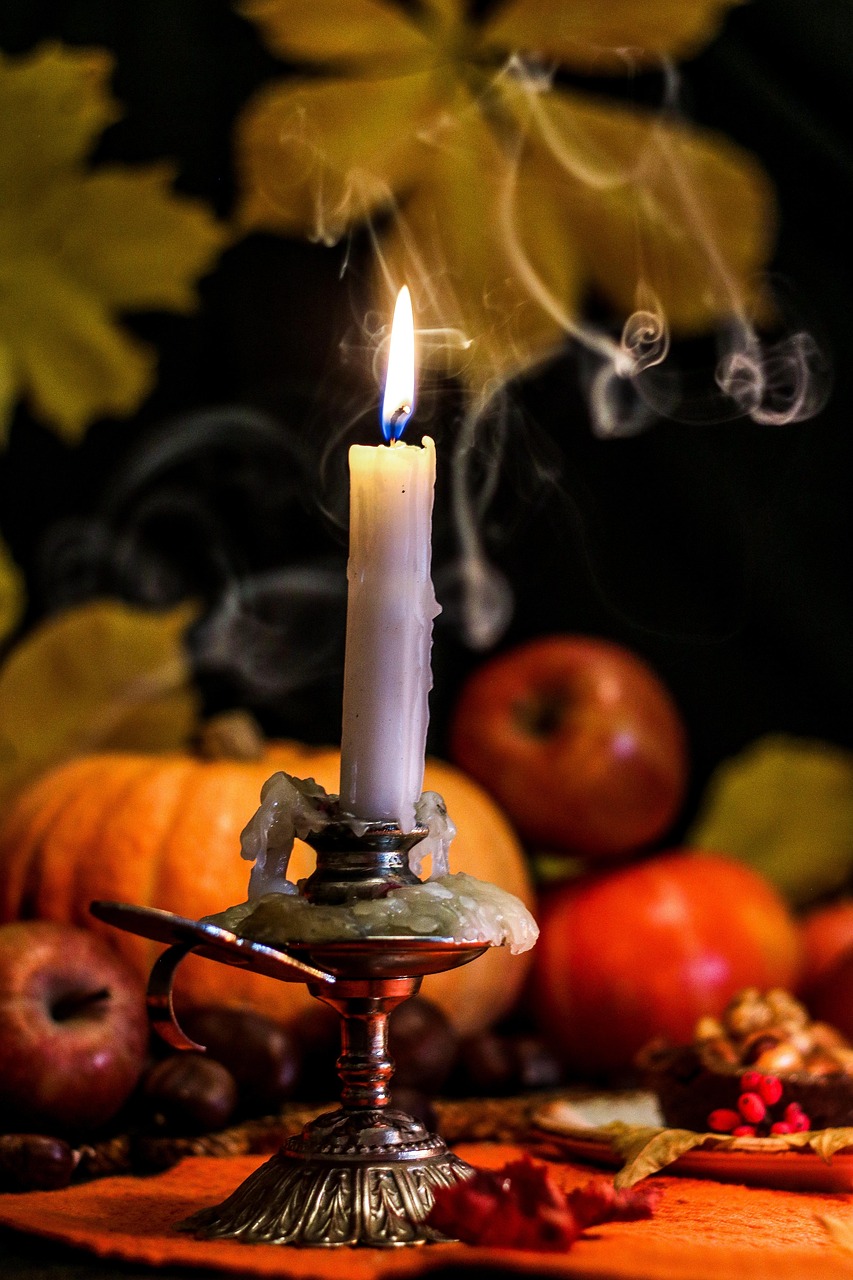
Join us for community, song, fire, food, prayer, and offerings as we mark Samhain together honoring the ancestors and the turning of the wheel toward the dark half of the year.
In LIEU of a $35 donation to cover expenses, we ask that you bring:
- An offering for the fire
- A log for the fire
- Healthy food to share
- Optionally, something to offer the circle – a song, a story, an experiential piece, or an activity related to Samhain or ancestral remembrance. Let us know in advance so we can weave it into the gathering.
If you’re NOT able to bring these, a $35 donation is welcome instead. This is a community-building event, and helping with setup/breakdown also earns a free ticket.
To RSVP: Contact Laura via text 857-880-0365 or via contact page
ADDRESS: Because this is a private residence, exact address given upon RSVP. If inclement weather, the address will shift to the Healing With Spirit studio space in Hingham.
Samhain from the Irish Perspective
Samhain (pronounced SOW-in) marks one of the four great fire festivals of the Irish agricultural and spiritual calendar, alongside Imbolc, Bealtaine, and Lughnasadh. Falling around November 1st, it marked the end of the harvest and the beginning of the dark half of the year … the boundary between the world of the living and the world of the dead was believed to grow thin, allowing spirits, ancestors, and the Sídhe (the Otherworldly folk) to move more freely between realms.
Historically in Ireland, Samhain centered on communal gathering rather than solitary observance. Households extinguished their hearth fires and relit them from a shared communal bonfire …often kindled at hilltop sites … binding the community together for the coming winter. The Hill of Tlachtga (in County Meath) is one of the most significant sites associated with these Samhain fires, believed to be the origin point from which the ritual flame was distributed to hearths across the land.
Offerings of food and drink were left out for the dead and for the Sídhe both as a gesture of respect and as protection, placating spirits so the household and livestock would be safe through winter.
Divination was common too: this liminal night was considered especially potent for seeing into the future, through apple peels, nuts thrown into the fire, and other folk methods.
Samhain was also a time of storytelling and communal reckoning such as tales of the ancestors, the harvest, and the dead were shared around the fire, reinforcing lineage and continuity even as the visible world grew darker.